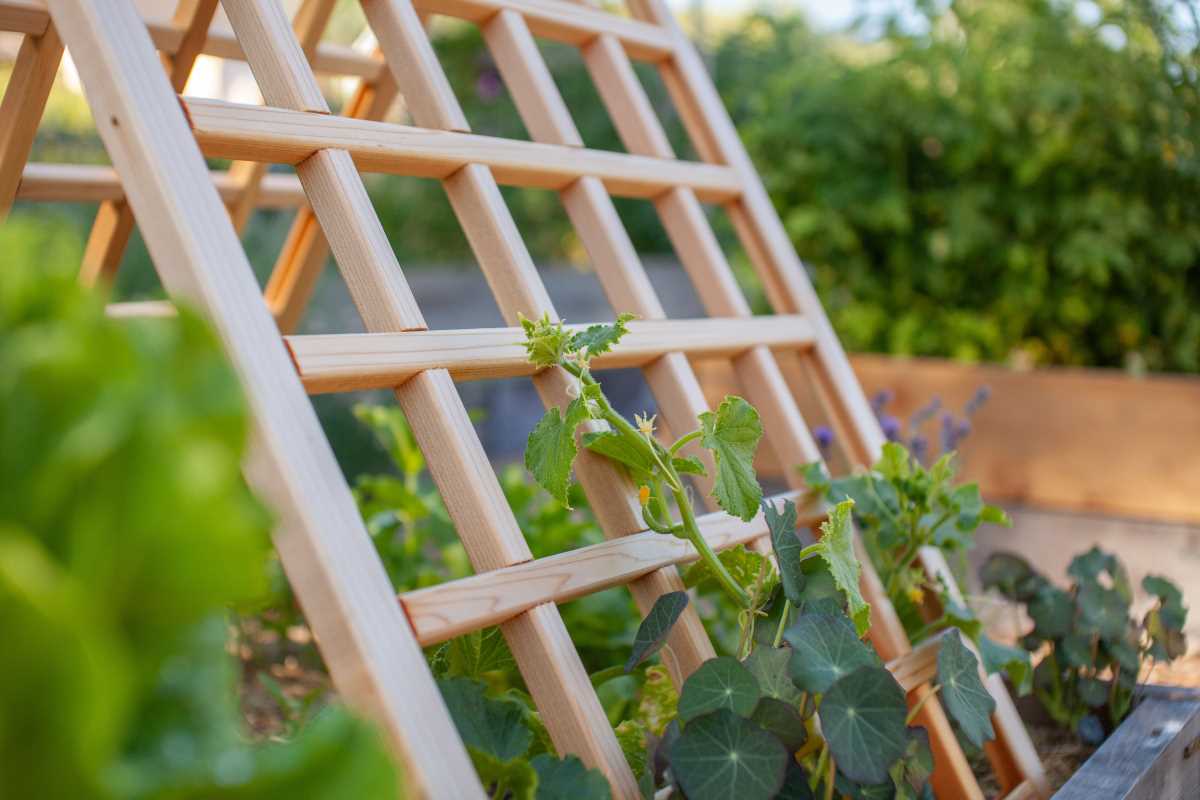
 (Image via
In the world of gardening, we often think horizontally, focusing on the beds and borders that spread across the ground. But for those with limited space, or for anyone looking to add a new layer of beauty and productivity to their garden, the real secret is to look up. Vertical gardening is a transformative approach that utilizes trellises, arbors, and other supports to train plants to grow upwards, turning flat, unused surfaces into lush, living walls of foliage and flowers. Using a trellis is more than just a space-saving trick; it’s a way to create privacy, add architectural interest, and improve the health of your plants. It’s about cultivating a three-dimensional garden that draws the eye upward, creating a sense of enclosure and magic. Whether you want to cover a plain fence with fragrant jasmine, grow a bounty of cucumbers on a small patio, or create a stunning floral entrance with climbing roses, a trellis is the key. This guide will explore the art of growing vertically, helping you choose the right plants, select the perfect trellis, and turn any blank wall or small space into a thriving vertical oasis.
Why Go Vertical? The Benefits of Using a Trellis
Before we get into the "how," let's talk about the "why." Incorporating trellises into your garden design offers a host of benefits that go far beyond simply looking pretty. It's a strategic move that can make your garden healthier, more productive, and easier to manage.
First and foremost, growing vertically is an incredible space-saver. For urban gardeners with small balconies, patios, or tiny yards, a trellis allows you to grow a surprising amount of food and flowers in a very small footprint. A vining squash plant that would sprawl over a ten-foot area on the ground can be trained up a trellis, taking up only a square foot or two of soil space. This opens up a world of possibilities for those who thought they didn't have room to garden.
Beyond saving space, trellising significantly improves plant health by promoting better air circulation. When plants like cucumbers, melons, or even tomatoes are left to sprawl on the ground, their leaves often stay damp, creating the perfect conditions for fungal diseases like powdery mildew. Lifting these plants up off the ground allows air to flow freely around the foliage, helping leaves dry out quickly after rain or morning dew. This simple change can drastically reduce your disease problems. It also makes it harder for soil-dwelling pests to reach your precious fruit and leaves.
Finally, a trellis makes harvesting a breeze. No more hunting for hidden cucumbers under a jungle of leaves or discovering a zucchini that has grown to the size of a baseball bat. When your vegetables are hanging at eye level, they are easy to spot and pick at their peak ripeness. This accessibility not only saves your back but also encourages you to harvest more frequently, which in turn signals the plant to produce even more.
Choosing Your Climber: Plants That Love to Go Up
The first step in planning your vertical garden is choosing the right plant for the job. Climbing plants have different methods of ascending, and matching the plant to the right type of support is crucial for success.
Twining Vines
Twiners, like pole beans, morning glories, and jasmine, climb by wrapping their flexible stems around a support. They are excellent for wrapping around poles, wires, or the uprights of a traditional lattice trellis. They need something relatively slender to grab onto—usually no more than an inch or two in diameter. A thick, four-by-four post would be too wide for many twiners to get a good grip.
Tendril Climbers
Plants like sweet peas, grapes, and cucumbers climb using tendrils—special, wiry growths that reach out and curl around whatever they can find. These plants need a support with thin elements, making grid-like trellises made of wire mesh or nylon netting an ideal choice. The fine grid gives their delicate tendrils plenty of opportunities to latch on.
Scramblers and Ramblers
Plants like climbing roses and bougainvillea don't truly climb on their own. They produce long, stiff canes that "scramble" up and over things, using other plants for support in their natural environment. In a garden setting, they need to be manually tied to a sturdy support structure like a strong trellis, arbor, or fence. You will need to actively train these plants by weaving their canes through the support and securing them with soft ties.
Selecting the Perfect Trellis
The market is filled with a huge variety of trellises, from simple wooden lattices to ornate metal structures. The best choice for you will depend on your budget, your style, and, most importantly, the type of plant you intend to grow.
Wooden Lattices
The classic diamond-patterned wooden lattice is a versatile and popular choice. It's readily available and can be attached to a wall, a fence, or set in the ground as a freestanding screen. Wood offers a natural, rustic look that blends well into any garden. It's a great all-purpose option suitable for many twiners and tendril climbers. Be sure to choose cedar or another rot-resistant wood, or treat the wood with a non-toxic sealant to prolong its life. When mounting a lattice against a wall, use spacer blocks to create a gap of a few inches between the wall and the trellis. This is essential for good air circulation and gives twining vines room to wrap around the supports.
Metal Trellises
Metal trellises range from simple wire grids to elaborate, decorative wrought-iron pieces. They are extremely durable and can support very heavy, woody vines like wisteria or trumpet vine, which would eventually crush a flimsy wooden trellis. Wire grids or cattle panels are a wonderfully functional and affordable option, especially for a vegetable garden. They provide the perfect support for hungry tendril climbers like peas and cucumbers. More ornate metal trellises can act as a stunning focal point in the garden even before a plant has covered them.
String Trellises and Netting
For annual vines, especially in the vegetable garden, a simple string or net trellis is a highly effective and inexpensive solution. You can create one easily by running durable nylon netting or jute twine vertically between a top and bottom support. This is a perfect setup for pole beans, cucumbers, and even smaller melons. At the end of the season, the entire structure—plant and all—can be taken down and composted, making cleanup incredibly simple.
Tips for Vertical Gardening Success
Once you have your plant and trellis, a few simple techniques will ensure your vertical garden thrives.
Position Your Trellis First: Always install your trellis before you put your plants in the ground. Trying to add a support structure after the fact is a sure way to damage the plant's delicate roots and stems.
Guide, Don't Force: In the beginning, you may need to help your young plants find the trellis. Gently guide the new, flexible stems towards the support. For scramblers like climbing roses, you will need to actively tie the canes to the trellis as they grow. Use soft, flexible ties like strips of fabric, garden twine, or specialized plant ties. Avoid using thin wire, which can cut into the stems as they grow.
Water and Feed Appropriately: Plants growing in containers or against a hot wall will dry out more quickly than those in a garden bed. Check the soil regularly and water deeply when the top inch or two is dry. Vertical vegetable gardens are also working hard to produce a lot of growth and fruit in a small space, so they benefit from regular feeding with a balanced liquid fertilizer every few weeks during the growing season.
Plant with the Future in Mind: Remember that a small, young vine will one day become a large, heavy plant. Ensure your trellis is strong enough to support the mature weight of the plant you've chosen. A wisteria vine can pull down a poorly constructed porch, so always match the strength of your support to the vigor of your climber.